An independent community heritage project
Cite this page

Aguri Heritage. “Aguri Heritage.” Last updated: . https://aguri-heritage.in/.

Citing this page does not grant permission to republish it. Copyright & reuse.

Aguri / Ugra Kshatriya · Rarh Bengal

A people.
A place.
A living history.

Welcome to Aguri Heritage. Explore the history, people and traditions of the Aguri / Ugra Kshatriya community of West Bengal, through the records and memories that connect generations.

Last updated:

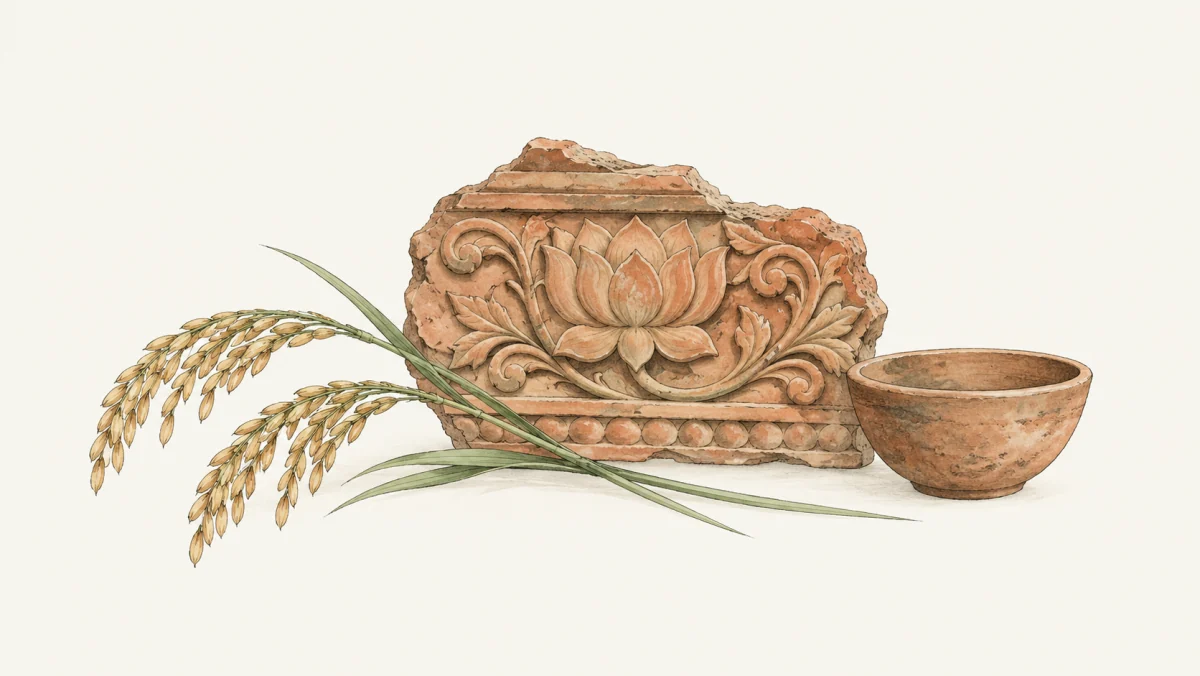
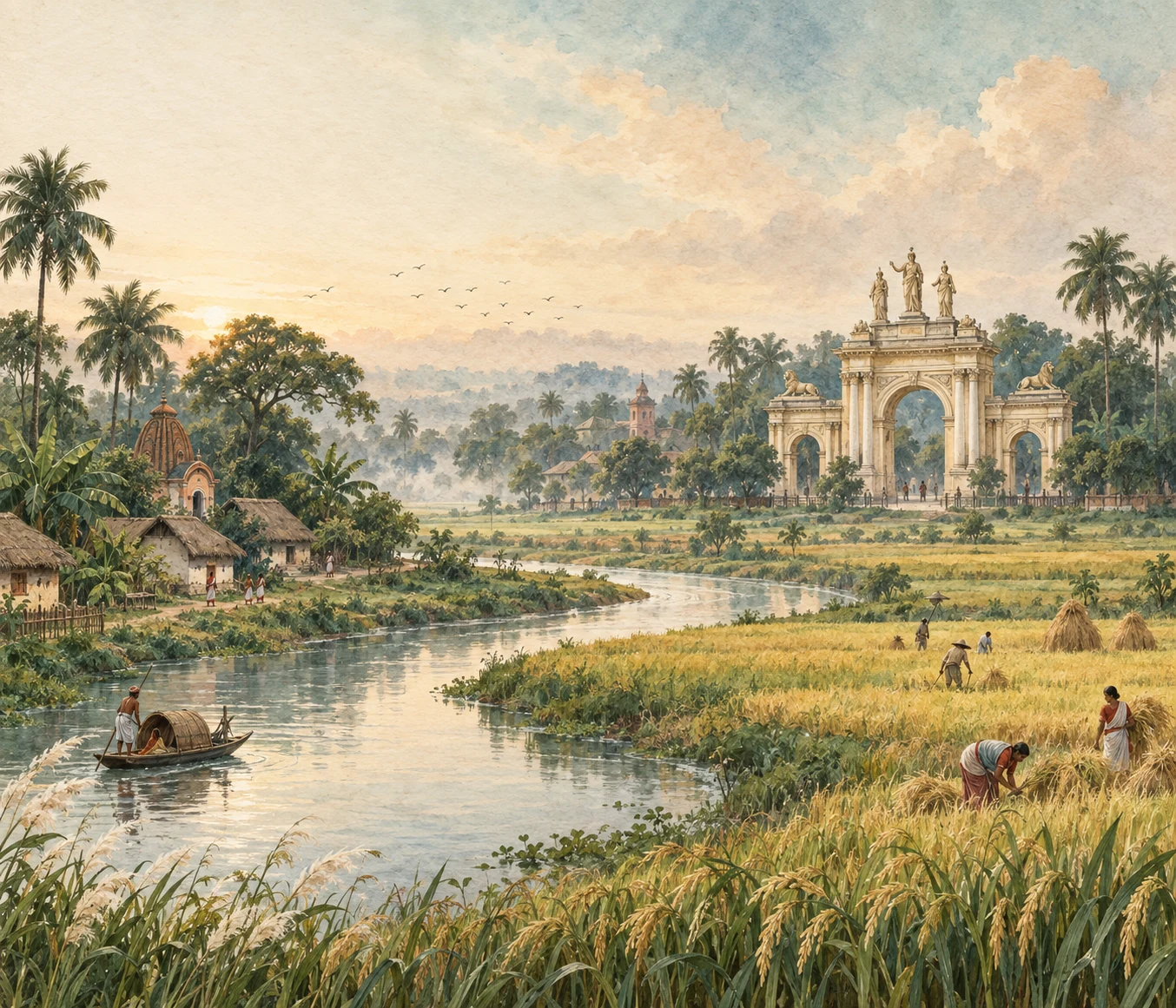
Watercolor imagining Burdwan through a winding river, golden paddy fields, village life and Bijoy Toron, also known as Curzon Gate
River of MemoryBurdwan’s land, river and living heritage · An imagined landscapeExplore the places →
A community, two familiar namesAguri · Ugra Kshatriya
Historical heartlandRarh, West Bengal
A shared heritageHistory · Culture · People

New history article

From Nagadee to Jotedar

The Burdwan Raj and the Origins of the Aguris.

Welcome to Aguri Heritage

The Aguris of Bengal

A community’s story through its roots, livelihoods, learning and public life.

The Aguris, also known as Ugra Kshatriyas, are a Bengali Hindu community closely associated with Rarh Bengal, particularly Bardhaman and the neighbouring districts of Birbhum, Bankura and Hooghly. Their history brings together village life, cultivation, military service, enterprise, education and contributions to Bengal’s public life.[1][2]

Roots, service and settlement

Our Origins article argues that the Aguris may descend from the Nagadee forces, the Burdwan Raj’s cash-paid army. It links the force’s formation to the upheaval of 1696 and its eighteenth-century service to defending the Raj, including against the Maratha raids. On this reading, cash wages point to hired soldiers who initially held no local land.

As the East India Company reduced the force between 1763 and 1809, former soldiers turned to cultivation and landholding. Many became substantial peasants with holdings of 30–100 acres, joining the ranks of the jotedars. By 1891, Risley described many Aguris as holders of estates and tenures, and most as fairly prosperous cultivators.[1][3]

The community’s concentration in Burdwan—home to 73–87 per cent of Bengal’s Aguris in the censuses of 1872–1921—supports this account.[1] The article also reassesses the Chandimangal couplet and traces “Ugra Kshatriya” as a later name, documented from the 1870s and adopted in the 1931 census. Read From Nagadee to Jotedar for the full argument, timeline and sources.

Land, enterprise and community

Agriculture remained central to many families, while others developed interests in grain trading, lending, rice milling and mining. Dutta describes the Hazras of Anguna in rice milling and coal mining, the Panjas of Sathinandi in trade and landed investment, and the Sahana family of Bankura in a range of commercial ventures (pp. 308–310). These histories sit alongside those of ordinary and poor cultivators; opportunity and wealth were unevenly shared.[1] The Places section connects this story with villages, rivers and the historical concentration of Aguris in Burdwan.

Community organisation brought education and social reform into public discussion. Dutta dates the Ugra Kshatriya Samiti to 1888 and describes support for poorer children’s education, efforts to bring Jana and Suta divisions closer together, opposition to dowry and advocacy of widow remarriage (pp. 311–313).[1] Explore these initiatives in Culture and community life.

Lives and traditions

The Aguris are a small community. No census has counted Bengal’s castes, other than Scheduled Castes and Tribes, since 1931, so their present numbers can only be estimated. Projected forward from the last verified census count, 68,816 in 1921, they number roughly 3.2 lakh today: about 0.32 per cent of West Bengal’s population.[1][4] Even in Burdwan, where they became locally dominant as landholders, they made up only about 4 per cent of the district’s population in the censuses of 1911 and 1921.[1][5]

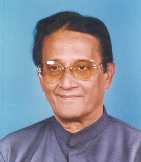
Despite these numbers, Aguris have held a prominent place in Bengal’s public life across its political spectrum. On the left, Benoy Choudhury led the Left Front’s land reforms from 1977; a tribute at his death called him the most senior member of the West Bengal cabinet after Jyoti Basu.[6][1] The Konar brothers shaped the CPI(M)’s peasant movement: Hare Krishna Konar as land and land revenue minister in both United Front governments, and Benoy Krishna Konar as president of the All India Kisan Sabha.[7][8][9] In the Congress, Jadabendra Nath Panja, a state minister, was president of the West Bengal Pradesh Congress Committee from 1958 to 1961.[10] In later decades the family of Ajit Kumar Panja played a leading part, first in the Congress and later in the Trinamool Congress. Ajit Kumar Panja represented Calcutta North-East for twenty years and served as a Union minister; his brother, Dr Ranjit Kumar Panja, represented Barasat; and his daughter-in-law, Dr Shashi Panja, was a state minister from 2013 to 2026.[11][12][13][14] Since May 2026, Agnimitra Paul, MLA for Asansol Dakshin, who married into an Aguri family, has been a minister in the state’s BJP government.[15][16][17]

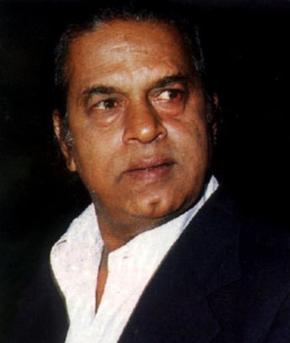
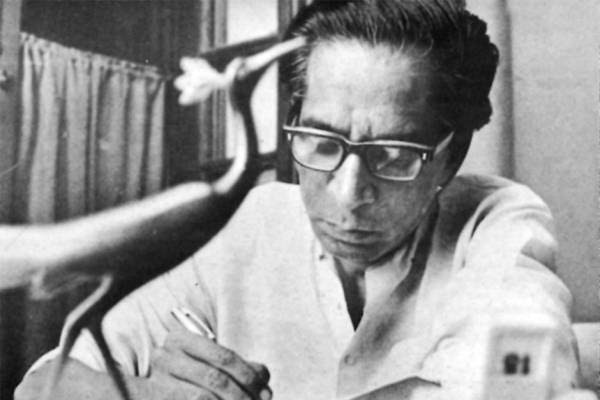
The community has also left its mark on Bengal’s culture. Pratap Chandra Ray published a complete English Mahabharata; Shakti Samanta directed Hindi and Bengali films from Aradhana to Amanush; Ramapada Chowdhury, a Sahitya Akademi Award winner, shaped modern Bengali fiction as novelist and editor; and Satya Kinkar Sahana of Bankura wrote poetry and studies of literature and religion.[18][19][20][1] The People collection gives sources for each life and, where one has been found, for the community connection.

Heritage also lives in shared observances and village ties. The account of Yogadya worship at Khirgram, for example, places Aguri participants within a festival involving several communities.[21] Such connections invite us to preserve everyday memories alongside the lives of well-known people.

Explore the heritage

This website brings together history, culture, places and biographies, supported by Bengali books, historical records and scholarship. The research collection includes Dutta’s study and Sudarshana Bhaumik’s account of Bengal’s changing social world. You can also read Rajput O Ugrakshatriya in English and explore selected translated writings. The Ugrakshatriya-Pratinidhi volumes are preserved among the resources supporting this wider community history.

Whether you are tracing a family, revisiting a village or meeting the Aguri community for the first time, welcome. Use the language selector at the top right to read in English or Bengali. If you have photographs, documents or memories to share, the contribution guide explains how to help preserve them for future generations.
Begin your exploration

Many threads. One shared heritage.

About the project ↗

From the biographical collection

The people behind the stories.

Explore all profiles ↗

Photographs: Ajit Kumar Panja, Lok Sabha via Wikimedia Commons (GODL–India); Shakti Samanta, Yahoo! Movies as credited by Wikipedia, copyright retained by the rights holder; Ramapada Chowdhury, Jahidmrr via Wikimedia Commons, CC BY-SA 4.0, cropped for this preview. Full credits, reuse notes and community references accompany each profile.

Family & village stories

What will we pass on?

A family photograph, a school record, the story of a village or a remembered festival can add another perspective to Aguri heritage. Help build a fuller account of the community’s life across generations.

Contribute to the story →

Questions for further study

Research topics

Explore questions about Nagadee origins, Burdwan estate records, kul panjikas, oral histories and inequality today.

For readers who want to explore further

Resources behind the stories

Explore all resources →

Notes & sources

  1. Achintya Kumar Dutta, “Prosperity, Dominance, and Social Mobility: Emergence of a Mobile Caste in Colonial Southwest Bengal” (2023), pp. 297–324. Complete chapter, including endnotes and references, read directly in the supplied book. Page references use its printed pagination. Origin hypotheses remain attributed to the author. Link opens the publisher’s book record. Source details
  2. Sudarshana Bhaumik, The Changing World of Caste and Hierarchy in Bengal: Depiction from the Mangalkavyas c. 1700–1931 (2023). Every Aguri and Ugra Kshatriya passage in the supplied book was located by full-text search and read in context; the rest of the book has not been reviewed. The Rajasthan–Man Singh migration account is presented as an attributed tradition alongside Dutta’s uncertainty about origins. Link opens the publisher’s book record. Its passages on Manasa and Dharma Thakur were read in context on 9 October 2026. Source details
  3. H. H. Risley, The Tribes and Castes of Bengal, Vol. I (1891), pp. 12–13. Evidence of what a colonial author recorded in 1891. The text’s caste hierarchy, origin speculation and character stereotypes are not descriptions this project endorses. Source details
  4. Technical Group on Population Projections, Population Projections for India and States, 2011–2036 (National Commission on Population, Ministry of Health and Family Welfare, 2020). Report record consulted via PARI’s library. The Aguri figure is an estimate, not a count: castes other than Scheduled Castes and Tribes have not been enumerated since 1931, and changes in self-identification are not modelled. Source details
  5. Census of India 2011, West Bengal, Table A-2: Decadal variation in population since 1901. Table read 8 October 2026. The census totals are adjusted to 2011 district boundaries, while Dutta’s counts follow the boundaries of the time, so the shares are approximate. Source details
  6. Chanchal Sarkar, “He was a man of the masses” — The Tribune, Spectrum (25 June 2000). Read directly 8 October 2026. Calls him “the senior most member of the West Bengal cabinet after Jyoti Basu”; a tribute, not an official record of cabinet rank. Source details
  7. Biman Basu, “The Birth Centenary of Comrade HareKrishna Konar” (2014). Partisan remembrance, read directly; conflicting prison dates and age excluded. Source details
  8. Hare Krishna Konar — Wikipedia. Article read 6 October 2026; Cellular Jail section read 8 October 2026. Several claims in the article (languages, foreign party memberships) lack adequate sourcing and are not used; its account of the 1937 hunger strike has no specific references. Source details
  9. “হরেকৃষ্ণ শতবর্ষেই প্রয়াত বিনয় কোঙার” — Anandabazar Patrika (15 September 2014). Bengali article read directly; used in an original English paraphrase. Source details
  10. The Nehru Archive — Jadabendra Nath Panja (1886–1961). Biographical note read directly. Community identification separately supported by Dutta, pp. 310 and 314. Source details
  11. Lok Sabha, obituary references, 10 December 2008 — Ajit Kumar Panja. Indexed text of the parliamentary record consulted. The archive’s PDF endpoint was intermittently unavailable during this review. Source details
  12. Dr Ranjit Kumar Panja — Twelfth Lok Sabha biographical sketch. The reproduced biography was read directly. It is a period account, not a complete retrospective biography. Source details
  13. Shashi Panja — Wikipedia. Article read 8 October 2026. Her connection to the Panja family is by marriage; this website does not infer her own community from the surname. Source details
  14. “Aguri (caste)” — reference article and bibliography. The listed community connections are attributed to this article. Life and career accounts are separately sourced; the underlying books have not all been checked. Source details
  15. Paschim Bardhaman district — current constituencies and elected representatives. Official directory read 9 October 2026. Used for her constituency and party; it is not evidence of community affiliation or a source for vote totals. Source details
  16. Press Information Bureau — West Bengal ministers take oath (9 May 2026). Official announcement read 9 October 2026. Used for the start of her ministerial service in May 2026, not for portfolio allocations or community affiliation. Source details
  17. Debajyoti Chakraborty, “Burnpur to Brigade - Pupai traverses a long road” — UNI (9 May 2026). Profile read 8 October 2026. The publisher’s migrated page, checked 9 October 2026, displays a 9 May 2026 publication date and an opening preview; full access requires sign-in. Her marriage into an Aguri family is stated on the project owner’s information; no published source for the Paul family’s community has yet been found. Source details
  18. Jogendra Nath Bhattacharya, Hindu Castes and Sects (1896), contents p. x and pp. 156–158. Evidence of Bhattacharya’s classification and account, not official army recruitment or a regiment. His caste hierarchy, scriptural genealogy and character stereotypes are historical claims, not present-day facts. The chapter prints the translator’s name as “Kishori Mohan Ganguli”; the profile uses Kisari Mohan Ganguli, as credited in the Mahabharata edition’s publisher’s preface. Source details
  19. Shakti Samanta — Shakti Films / Aradhana Films biography. Birth year 1925 differs from the widely reported 1926; the profile omits it. The precise language/category of the claimed Amanush Best Film award remains unresolved and is not used. No studio portrait is reused. Source details
  20. Ramapada Chowdhury — biographical reference. Life and literary career only; this biography does not establish an Aguri community connection. Source details
  21. তরুণ চক্রবর্তী, “শরতের দুর্গোৎসবেও জলমগ্ন থাকেন ক্ষীরগ্রামের দশভুজা” — Anandabazar Patrika (24 September 2023). Bengali article read directly. Its inconsistent royal chronology is not used as historical evidence. Source details

Search the heritage project

Enter a word or phrase to begin.

For Bengali text inside the journals, use the journal reader.